
A bullfighting event is governed by the symbolism of five handkerchiefs of different colours, used by the president of the bullfight according to how the spectacle unfolds. Below, we explain each colour and its specific function.
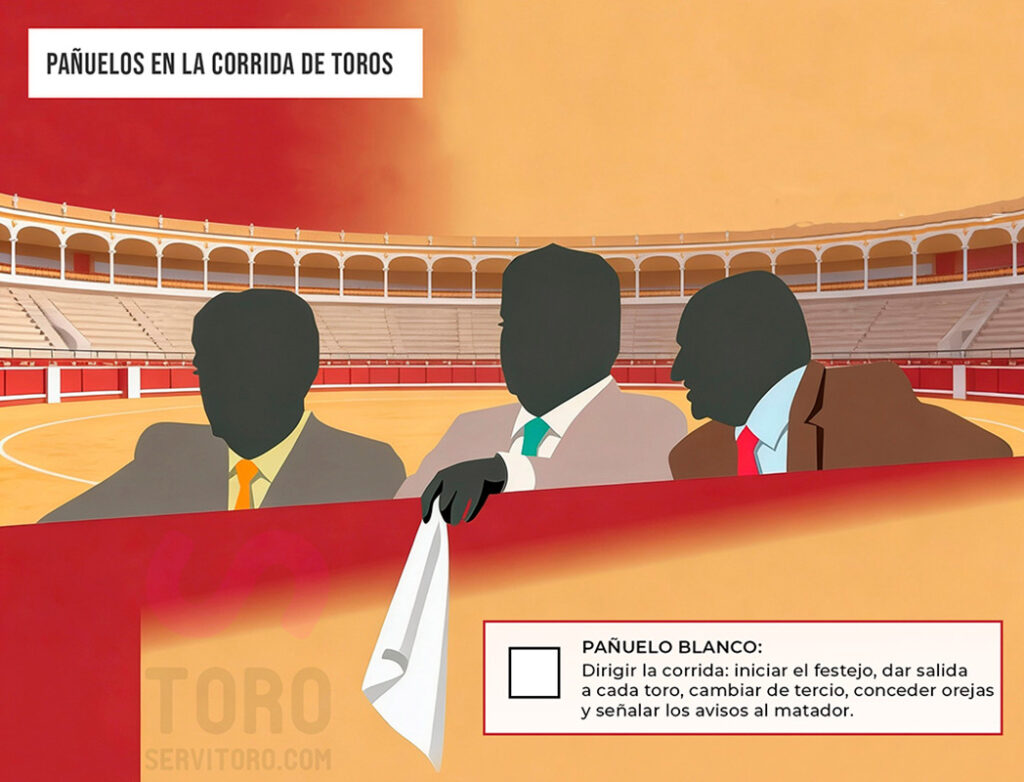
White Handkerchief
This is the president’s main handkerchief. It is used to start the bullfight and, throughout each bout, to signal the entrance of each bull, changes of tercio (stage), the awarding of ears and the issuing of time warnings (avisos).
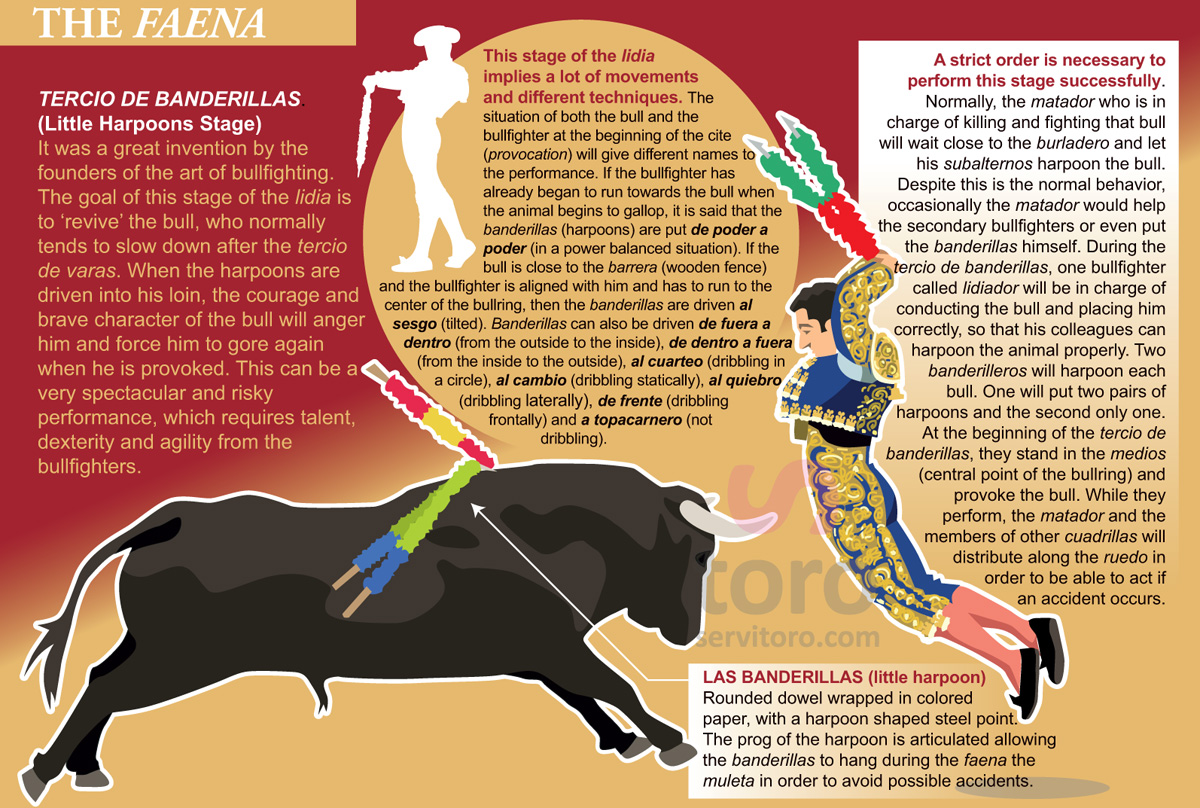
In practical terms, the president uses the white handkerchief to call the picadors into the ring (first tercio), begin the banderillas stage (second tercio) and signal the start of the faena with the muleta (final tercio)
The awarding of the first ear depends on the public’s request. The president must assess the intensity of that request, expressed by spectators waving their handkerchiefs, before granting the trophy. The second ear, however, is entirely at the president’s discretion. In addition to the public’s demand, he will assess the quality of the performance and the placement of the sword before deciding whether the matador deserves this second award.
As for the time warnings, the first is given 10 minutes after the faena begins. The second sounds at 13 minutes, and at 15 minutes — if the bull is still in the ring — it will be returned to the pens. At each of these moments, the president informs the matador by waving the white handkerchief, while the trumpeters give an audible signal to indicate the remaining time.
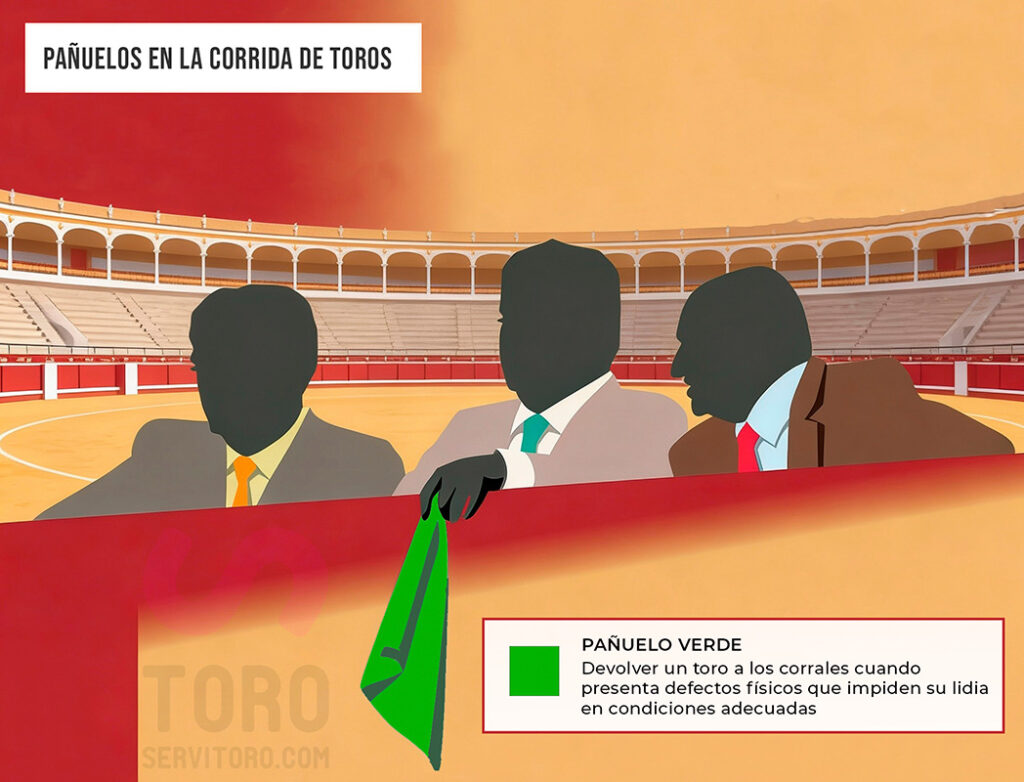
Green Handkerchief
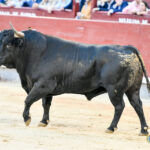
The green handkerchief is used to order a bull to be returned to the pens. This decision is only appropriate if the bull shows a physical defect, such as lameness, lack of strength or vision problems.
If a bull becomes injured during the fight, returning it is not strictly mandatory, but it is often advisable. For this reason, the president frequently makes this call, allowing the matador to face a bull in proper condition and preventing unrest among spectators, who have paid to see six bulls fought under suitable conditions.
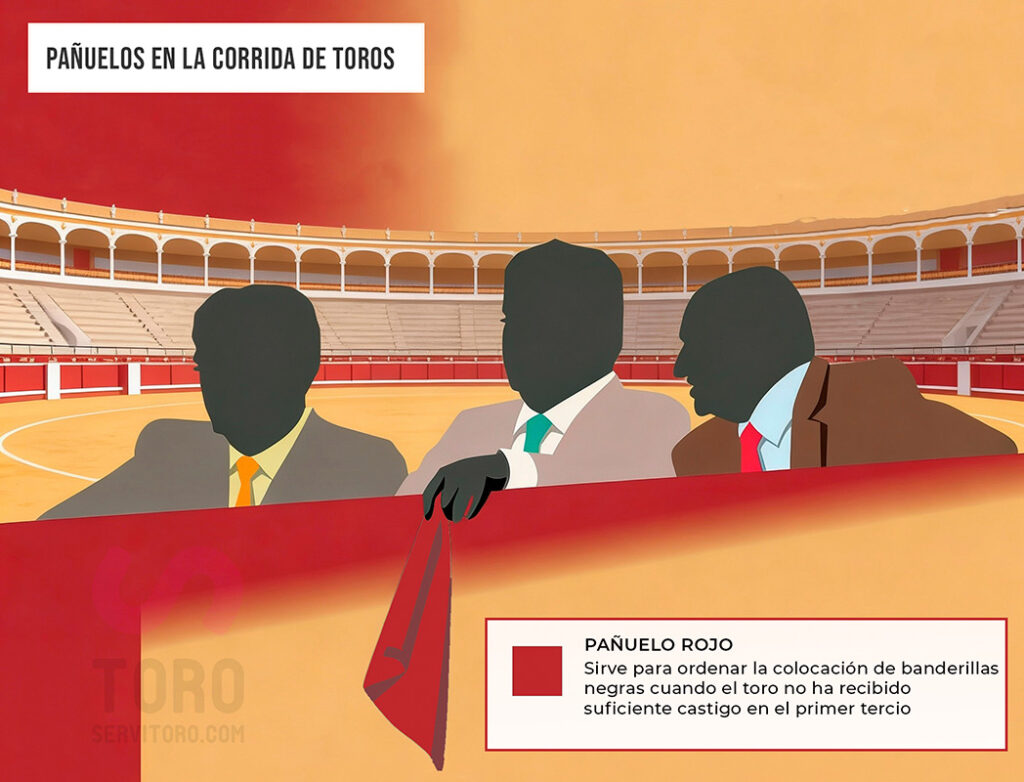
Red Handkerchief
The red handkerchief is displayed when the president orders the use of black banderillas. This happens when a bull has not received sufficient punishment from the picadors, usually because its lack of bravery has caused it to avoid the lance. Black banderillas, which have double harpoons, are used to correct the behaviour of a bull that has not been adequately bled during the vara stage.
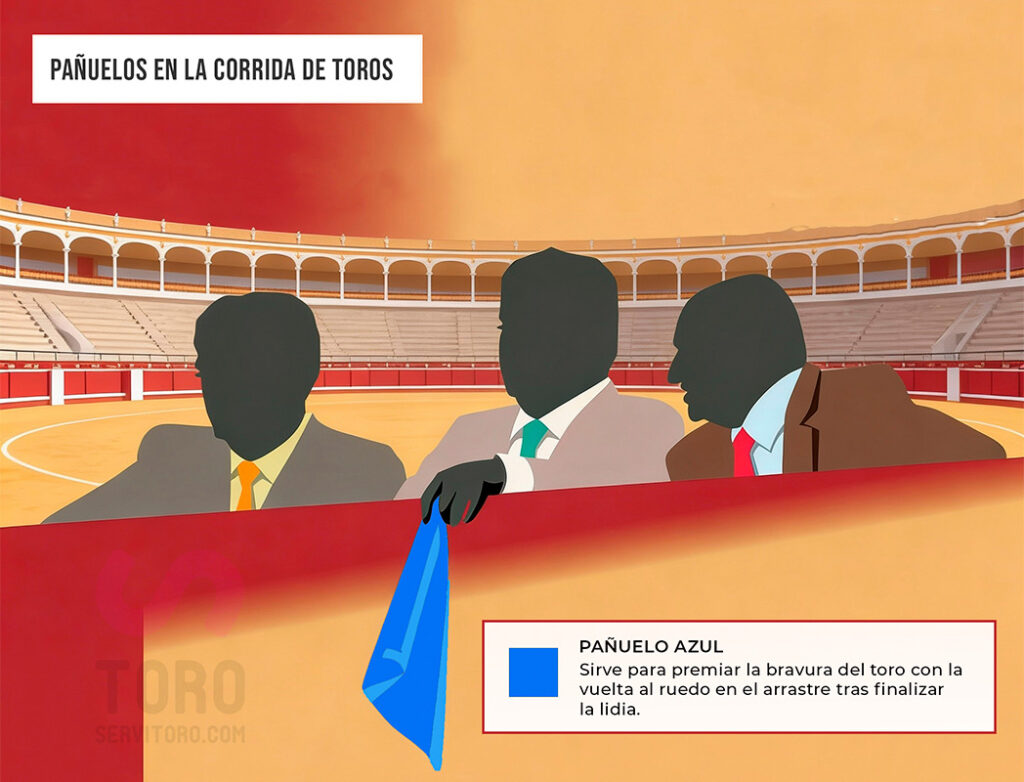
Blue Handkerchief
The president waves the blue handkerchief to award a bull a lap of honour in the drag, in recognition of its bravery. After requesting trophies for the matador, the crowd often waves their handkerchiefs in a circular motion to suggest that the bull deserves this honour for its performance throughout all three stages of the fight.
The president usually consults his artistic adviser, who provides expert guidance on whether the bull merits this distinction.
In Mexico, there is also a prize known as slow drag (arrastre lento), awarded to bulls that, while not outstanding overall, have shown noteworthy qualities.
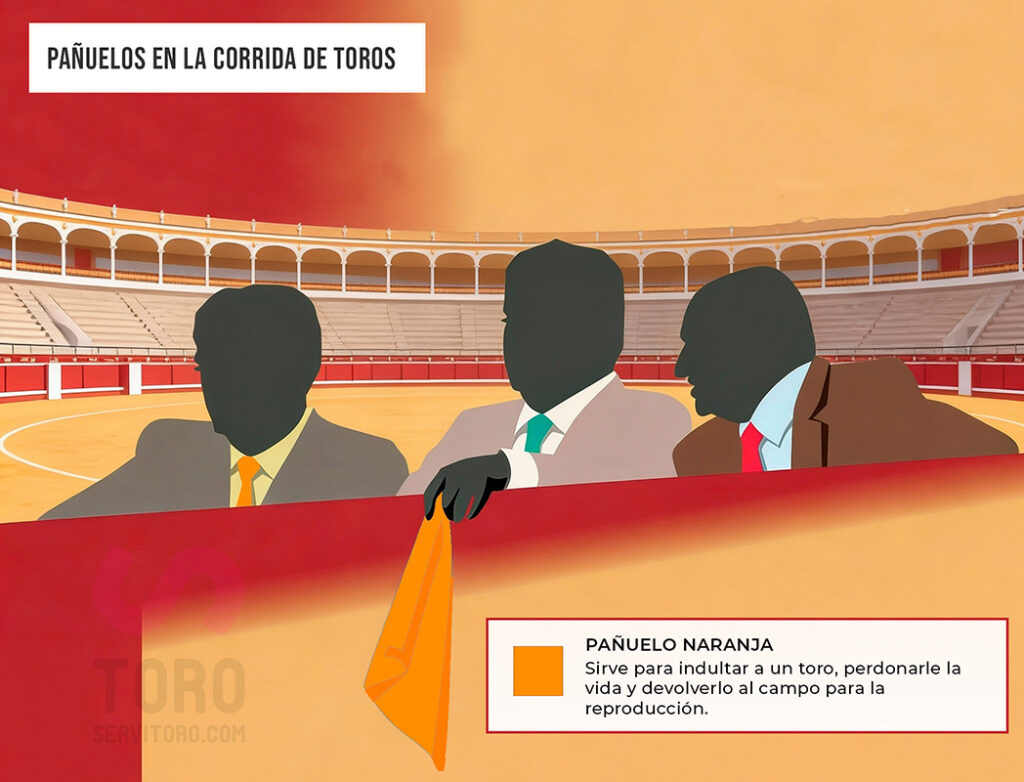
Orange Handkerchief
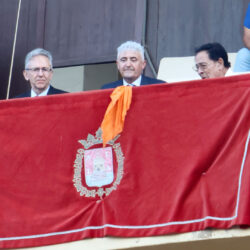
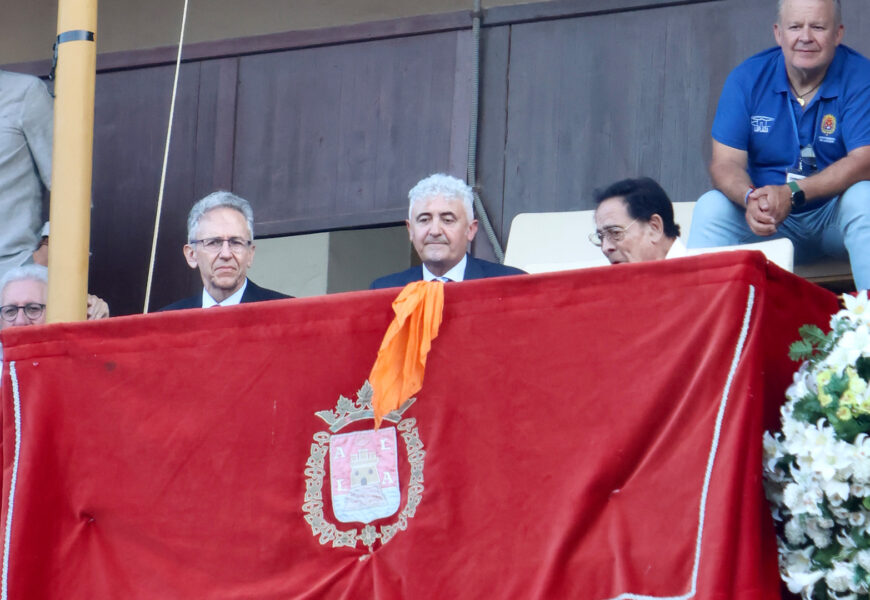
The orange handkerchief is used to grant a bull a pardon (indulto), allowing it to return to the countryside for breeding purposes. The president displays it at the public’s request, sometimes after consulting the breeder, when a bull is truly exceptional and meets all the requirements to pass on its bravery.
This is the highest possible honour for a fighting bull, reserved for only a few animals whose behaviour across all three stages of the fight justifies such a decision.
Alongside the red handkerchief — which is increasingly rare — the orange handkerchief is the least frequently seen in a bullring, yet it is the one that brings the greatest glory. It encapsulates the spirit and meaning of a unique spectacle, celebrating the triumph of both bull and bullfighter, and ultimately, of the fan in the stands.
Upcoming bullfighting events
Check the bullfighting calendar in Spain: Seville, Valencia, Madrid… more than 150 bullrings and bullfighting events
Latest news - you're interested!

Colors of the Costume of Lights

How to Dress for a Bullfight

How to Wash and Preserve a Bullfighter’s Suit of Lights

When and how is a bull’s life spared in the bullring? Everything you need to know about the indulto

What is an “encaste”? The Foundational Bloodlines