
The origin of the fighting bull and its bloodlines
One of the most common questions among new enthusiasts is about the origin of the fighting bull and the different “encastes” within the brave cattle herds. In this article, you’ll find all the answers about the roots of this animal and the lineages that led to the bulls we see in the arenas today.
In bullfighting, the term encaste refers to the crossing of different bloodlines of fighting cattle. To understand this concept, we must go back to what are known as the Foundational Bloodlines — the original lineages from which the fighting bull, as we know it today, derives.
The fighting bull is the result of centuries of crossbreeding among these main bloodlines: Vistahermosa, Gallardo, Cabrera, Vazqueña, and Jijona. To these, we can also add the Navarrese and Castilian Morucha bloodlines, although many historians tend to overlook them due to their limited influence on the modern bull.
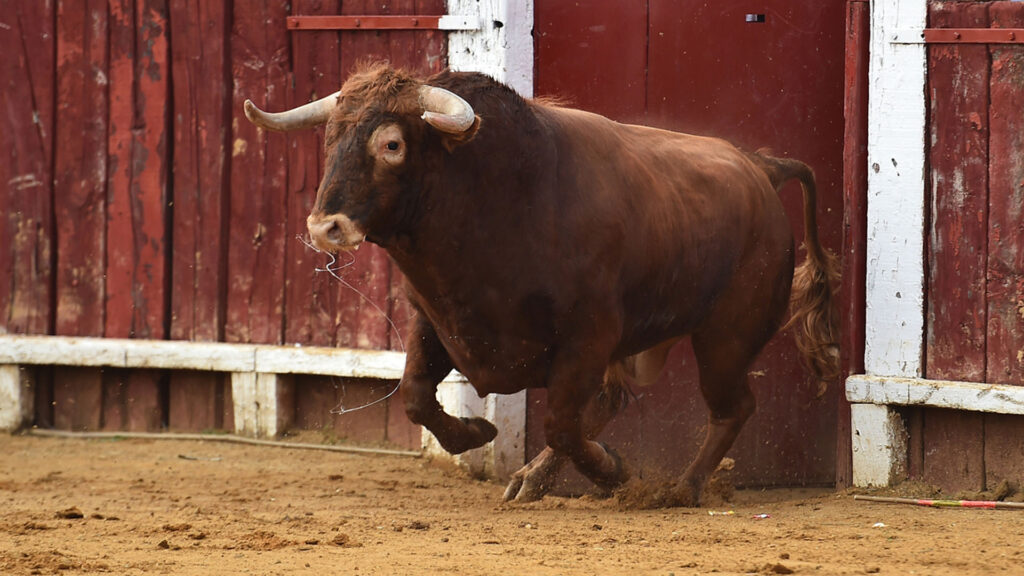
Let us now take a closer look at each of these foundational lines, which will allow us to trace how they evolved into the current encastes — a topic we will explore further in a later piece.
- Vistahermosa Bloodline
This bloodline emerged in the 18th century from cattle owned by the Rivas brothers of Dos Hermanas, later purchased by the Count of Vistahermosa. It is considered the most important foundational line, as most of today’s popular encastes descend from it.
Why is that? Because its characteristics best suit the modern bull — one that performs well in the final stage of the fight (the muleta) without exhausting itself in the peto (the horse’s protective pad), unlike bulls before the era of the visionary matador Joselito El Gallo. Joselito foresaw that this bloodline was the future of bullfighting, as it adapted perfectly to the evolving art form.
The famous encastes of Murube, Núñez, and Domecq all originate from this bloodline.
- Gallardo Bloodline
This line also dates back to the mid-18th century and originated from fighting cattle bred by the Dominican friars of the San Jacinto Convent in Seville. The name “Gallardo” comes from Francisco Gallardo, who acquired the herd in 1790.
These bulls are compact and well-built, with strong but not exaggerated horns. Their main flaw is a tendency not to lower their heads (“to humillar”) during the fight. Today, the only remaining herd that preserves this lineage is Partido de Resina (formerly known as Pablo Romero).
- Cabrera Bloodline
Originating in Utrera during the 17th century, this line was founded by José Rafael Cabrera. Cabrera bulls are tall, broad-bodied and of great presence — powerful, untamed, and fierce.
The only existing herd that still maintains some of this blood is Miura, whose bulls today represent a mixture of several lineages. However, the predominant and defining one continues to be that of Cabrera.
- Vazqueña Bloodline
Also from Utrera (Seville), one of the most renowned cradles of the fighting bull. These animals display a great variety of coat patterns and colours, with wide bodies and prominent foreheads. They are fiery and energetic during the early stages of the fight, particularly with the horse, but tend to fade as the fight progresses — which led to their decline in the early 20th century.
There are two main branches of this line: Veragua (whose blood is preserved by herds such as Prieto de la Cal, Aurelio Hernando, and the Portuguese Canas Vigouroux), and Concha y Sierra and Fernando Palha, which also graze in Portugal.
- Jijona Bloodline
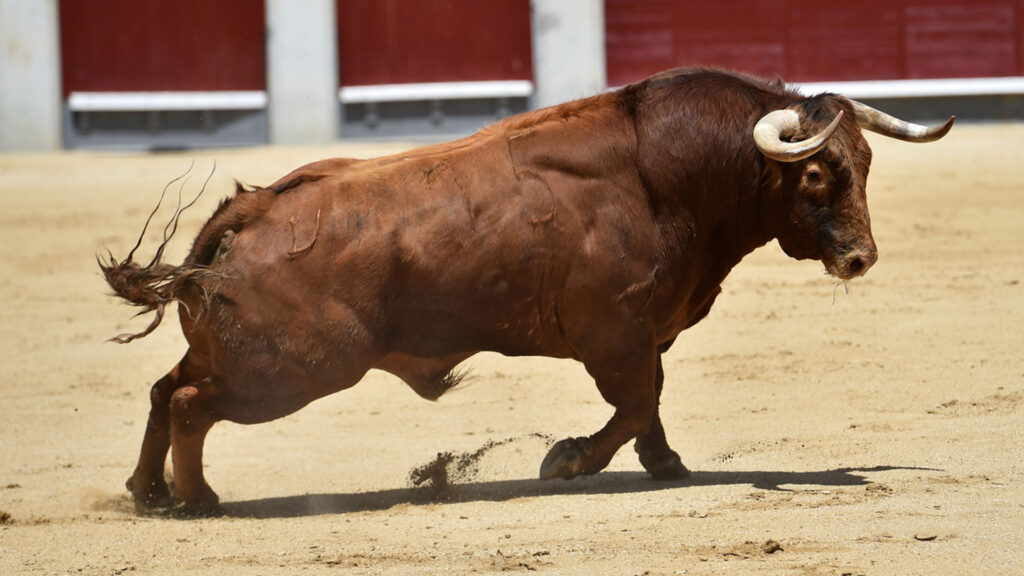
The last of the five great foundational lines. These bulls were bred from the late 16th century in Villarrubia de los Ojos (Ciudad Real), as well as in the Toledo Mountains, and along the Jarama and Tagus rivers, through Aranjuez and Colmenar Viejo.
Large and robust, they were known as “jijones” for their bright reddish coats. Renowned for their raw bravery, they were highly prized and often fought in Madrid due to their geographical proximity.
The arrival of the Vistahermosa bloodline gradually pushed them into extinction. The Aleas herd of Colmenar Viejo was likely the last to preserve pure Jijona blood. Some reports, however, suggest that a trace of it survives in the herd of Peñajara, which even adopted the name Peñajara de Casta Jijona to acknowledge this lineage.
- Navarrese Bloodline
This line dates back to the late 17th century and was found along the left bank of the River Ebro in Navarre, later spreading to Aragon, Catalonia, and parts of the Mediterranean coast.
With their reddish coats, these small but agile bulls were known as “toricos royos” (little red bulls). Though small in stature, they compensated with incredible speed and mobility — qualities highly valued when bullfighting focused mainly on the first stages of the fight.
As the faena became the central part of bullfighting, they disappeared from the arenas but found a new role in popular festivities — such as vaquilla releases, anilla contests and rosadero games — where their agility remains appreciated.
In recent decades, breeder Miguel Reta has worked to reintroduce this ancient bloodline into formal bullfights, with his Reta de Casta Navarra herd fighting at events in Céret, Estella, and San Agustín de Guadalix.
- Castilian Morucha Bloodline
This line refers to cattle that grazed along the banks of the River Duero in the early 18th century, particularly in Boecillo and Raso de Portillo (Valladolid), where what is said to be the first fighting bull herd in Spain was formed.
Today, a herd with the same name still exists in those pastures, known for its strong character and individuality. Its main base, however, now comes from the Santa Coloma line (Ibarra branch), far removed from the tough, rugged animals once famous for enduring the harsh Castilian winters. The original bloodline is considered extinct today.
Jose Miguel Arruego
Bullfighting Journalist